HUMAN-CENTRED
BUSINESS DESIGN
Frequently asked questions
What is Human-centred Design?
Human-centred design (HCD) is a creative approach to problem-solving that puts people (users, customers, stakeholders) at the heart of the process. It means designing with people, not just for them.
We start by understanding a problem before solving it, framing it, generating ideas, developing and testing concepts.
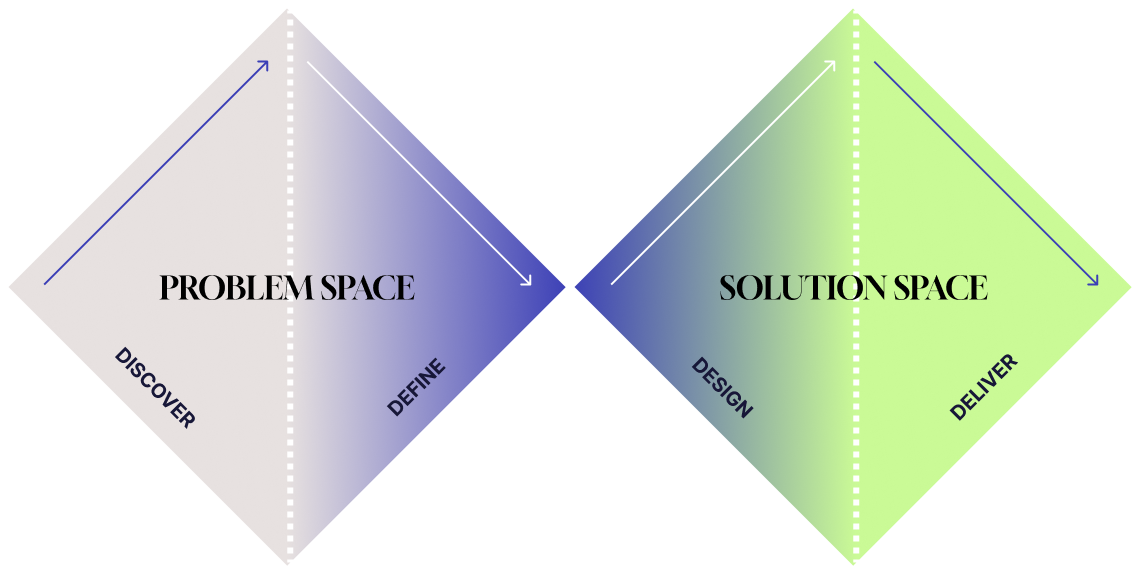
A human-centred approach involves stakeholders at every step of the process, not just for inspiration at the beginning or delivery at the end.
What is Business Design?
Business design combines the tools of business thinkers, analysts, and strategists with the methods and mindsets of design. Business designers figure out how to translate human needs into business goals. We offer ways to experiment with meeting both the needs of the organisation and the value it intends to bring to people’s lives.
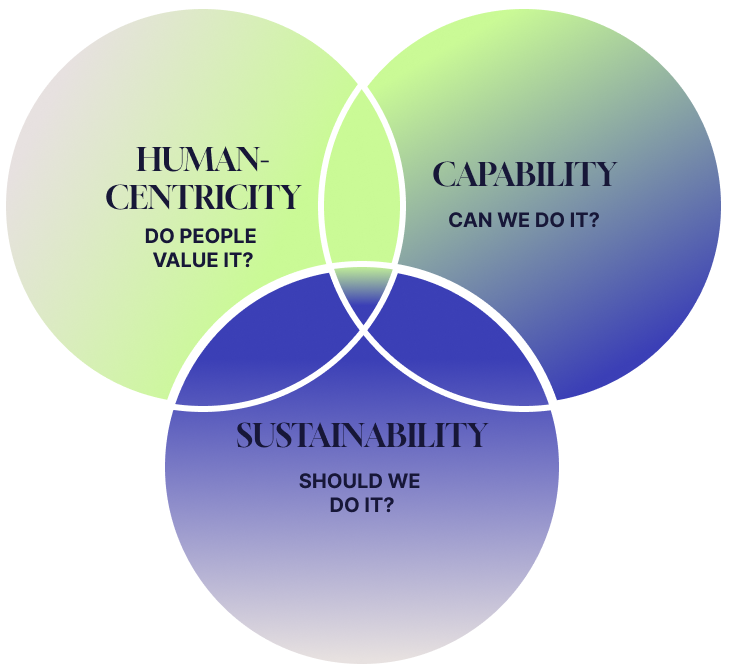
Business design is innovative by nature. We think about how every element of the business model affects the customer experience and vice versa.

-
I adopt a collaborative approach with clients and their teams and have found this the best way to help organisations readily adapt to change. This means acting as an external sounding board and strategic vision holder who’s primed to listen and reflect back during the time that I’m working with your organisation.
Key principles of how I work:
Pull together multiple and very different inputs into one clear and cohesive point of view
Ensure recommendations align with with the business strategy and roadmap
Reframe problems into design challenges to enable teams to think and act as innovators
Make ideas tangible by moving beyond theory to validating the needs of real people
-
It depends on the size of your organisation and how comfortable you feel listening to a perspective that’s different to yours. I find that bringing together a diverse group internal stakeholders produces the most interesting and informative results. This may include key team members from the executive team, marketing, sales, research, innovation, IT, operations and finance.
Co-designing with end-users (customers) should be organised a little differently to make the most of their time and availability. You’ll need to consider how comfortable they may feel sharing if you wish to include members of your organisation in the same forum. We can arrange for a ‘guest appearance’ of end-users at a certain point in the agenda. We can also capture their input in a separate research piece pre-workshop and play back verbatim findings with your internal stakeholders.
-
From 8 to 80 stakeholders. Sometimes it’s less than a handful of key decision makers. I can provide a recommendation based on the nature of your organisation, the problem and the outcomes we’re looking to achieve.
Whatever the number, I design and facilitate strategic workshops that empower every participant to practise design thinking, using customer-centric business frameworks to identify core issues, create internal alignment and generate rapid solutions to wicked problems.
-
Yes you can. So too can your competitors.
I like to think of AI as a very smart 8 year old that wants to show off everything it can do for you. But like a real life 8 year old, AI generally lacks enough real world intelligence and human experience to make lateral leaps in thinking. And someone’s feelings inevitably get hurt.
The time and effort you put into wrangling your LLM of choice to solve problems for your unique problem can still result in generic solutions - ideas that make your organisation look, feel and act like everybody else.
If you’re looking to be perceived differently by the market and loved by your customers, you need to aim for better than the new status quo. That comes from human-to-human collaboration and thinking.
-
The short answer is yes, BUT only to synthesise large amounts of data or information or speed up research. What used to take days now takes hours with helpful skills I’ve custom built in AI based on my tried and tested methodologies. For example, I used to manually decode themes from thousands of customer survey responses in a spreadsheet. Now that task can run asynchronously, saving hours of time that I can pass on to you.
I take critical thinking seriously when it comes to everything AI outputs because sometimes it can be way off.
You and I are the best judges of quality.
All thinking is original and words are my own.
-
Yes, I do. Please get in touch for a conversation where I can walk you through examples of service blueprints, operational blueprints, customer lifecycle maps, customer experience maps, user journeys, product feature specifications and more.
We’ll discuss which artefacts and what level of detail would best suit your organisation’s needs.